The Hottest Literati
Kitty Lever
It’s eighty degrees and raining outside as I make my way through an unfamiliar neighborhood, attempting to find the café where Kitty and I have agreed to meet. I am sweltering in what feels like my own private realm of humidity, regretting the gray silk skirt I’ve chosen to wear, which clings to my skin and, in doing so, conjures a sensory nightmare. Despite this, I’m in good spirits. I’ve been sent by Hot Literati, a literary community I’ve had the pleasure of being a part of for over a year now, and have recently taken on the role of NYC Chapter Lead.
My focus has long been women writers of the past, many of whom are admittedly dead, but Hot Literati has sparked a new interest in the women writers of our present moment. They are the ones carrying literature forward and cultivating new interest in it, particularly as so much of our cultural attention migrates online. And despite my proclivity toward history and old-fashioned taste, I am, without a doubt, a child of the internet. It’s time I move more accordingly.
So, after meandering in circles through what seems like a navigational labyrinth, at last, by pure intuitive luck, I stumbled upon our meeting point. She invited me to meet at Café Patoro, a women-owned spot known for its signature pão de queijo, a Brazilian cheese bread. As I walk into its cozy interior (women-owned spaces always feel the coziest), I immediately spot the pão de queijo glowing in all of its gluten-free glory—I should mention. Hypnotized, I salvitate accordingly, purchase one, and finish it before she arrives.
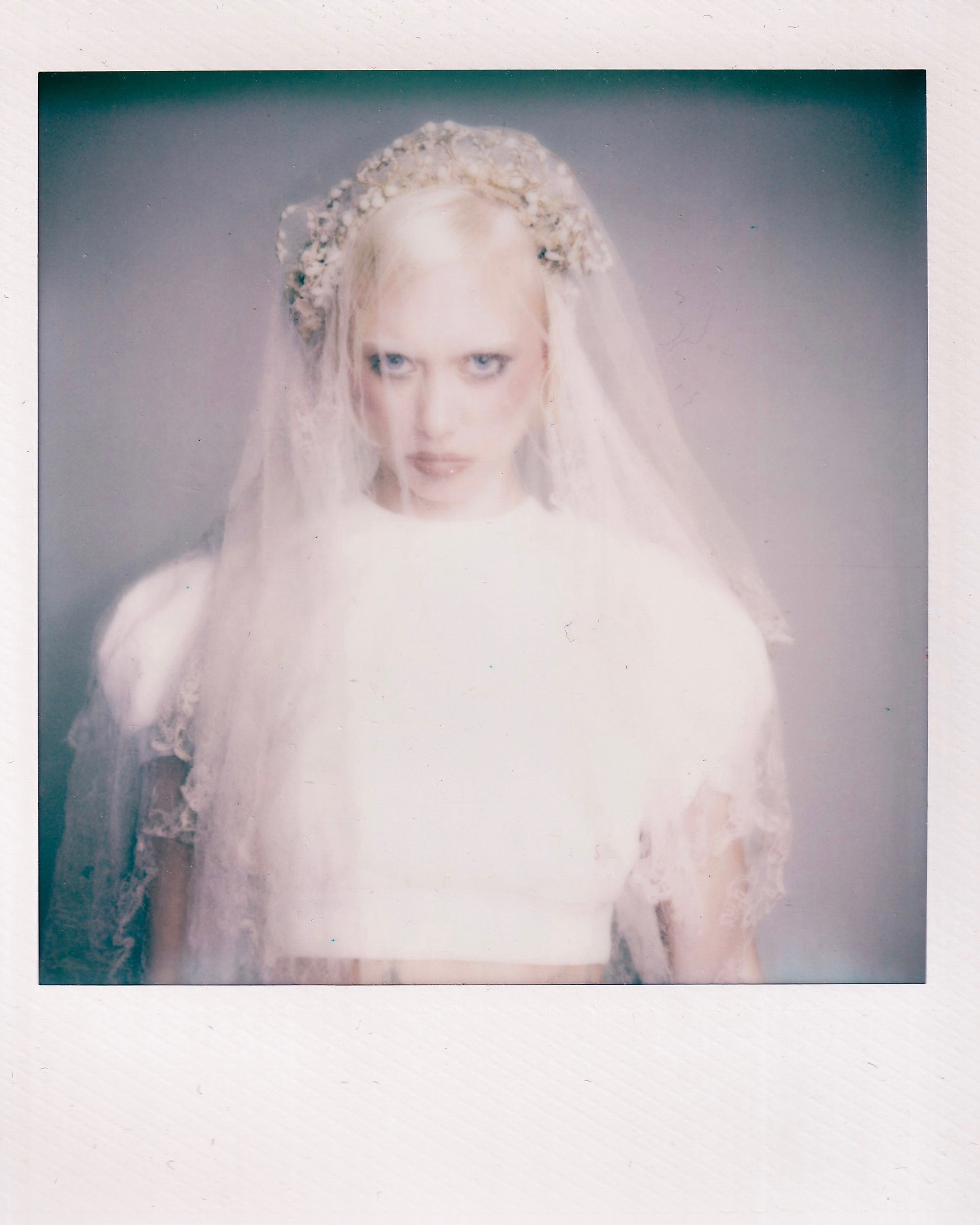
I first encountered Kitty Lever, like many, on social media whilst scrolling, and I’ll admit, despite my initial indifference toward influencer culture, born from a Luddite snobbery I am working through, something about the unique personage she’s crafted caught my eye. So when she first walks into the café, there’s that element of surreality that always arises from seeing someone in person whom you’ve only ever known through a phone screen. She’s not donning the glitter, eccentric girly outfits, or life-size Gollum figurine that have become emblems of her Instagram realm, nor does she speak in the exaggerated, high-pitched (cue the sureeee) tone I’ve come to associate her with. Instead, her voice is natural, albeit still girly, and her bright blue eyes are shielded slightly by a baseball cap. Her enthusiastic demeanor makes conversation come easily. What a shock to be reminded, time and time again, that internet personas, polished or otherwise, are not, in fact, purely real life.
The staff greets her with the familiarity of a regular and takes particular care with the latte she orders. She joins me at the table I’ve chosen by the window, where the rain is still pouring down, and we take some time to warm up to each other before diving into the interview.
I’m meeting with her today to discuss her upcoming art-poetry book, Whiskers of a Kitten, which is set for publication on October 27th. I’ve begun to realize that the influencer-to-publishing-a-poetry-book pipeline is, in fact, a very real thing. And, when you think about it, it makes sense. If you want to transfer an audience that first encountered you through short-form media into a literary audience, poetry is the closest literary counterpart to that. Poetry has always allowed for more freedom of expression and structural variation than other literary forms. Modern poetry, especially, mimics the experience of scrolling.You can jump from one to the other with ease and expect a new variation, even if they are similar or follow a theme. And, more obviously, it’s a model that has appeal to publishing houses, as influencers come with a pre-built, highly monetizable audience.
Despite this, I find her to be a breath of fresh air amongst the run-of-the-mill influencer set. Social media, to me, has become increasingly corporatized and, through that process, homogenized. I have never personally enjoyed online content for these reasons: there seems to be a mandated archetype of polished personas presenting easily digestible content, ideal for brand partnerships and the like. And this is understandable, given the nature of the influencer economy. But I find that the writers both past and present who appeal most to me are those with a distinct style and way of perceiving the world, one that goes against the tide. Kitty does just this in the face of digital conformity.
And given that she’s been working on Whiskers of a Kitten for over five years, long before any of her internet fame or success took hold, the book feels less like a byproduct of the audience she’s built online and more like a culmination of all the hard work and creative prowess she has spent years cultivating and putting out into the world.
As we sit there and linger in conversation I notice that she is fond of the word “alchemize,” and it feels particularly fitting when describing her path to success. She has the aura of a peroxide-blonde High Priestess, having alchemized the life she once dreamed of into reality. And perhaps most remarkably, she has done it entirely on her own. We share a sweet moment where she apologizes if she’s bad at maintaining eye contact throughout and hopes she doesn’t come across as rude. I reassure her it’s totally fine and that I myself often struggle with eye contact. At the top of the Google Doc, I had written my questions the night before as a reminder, in bold, highlighted, 72-point font: “EYECONTACT.”
Serendipitous.
I hit record and begin the interview, with both of us staring into space, concocting the appropriate daydream imagery to accompany our inspiring conversation:
LOWER MANHATTAN, AUGUST 27TH, 2PM:
Marissa: What writers ( if any) have inspired you ? And do you think any of their influence shows up in your work?
Kitty: The first would definitely be Richard Siken. I love his poetry so much. He wrote Crush, and I’ve read that book over five times. If I could write like anybody, I would want to emulate him, and I feel like, at certain points, I do. I love the way he speaks directly to the reader. It feels direct, and then, at other times, it feels like he’s going in and out of a fever dream. Even the way he puts the words on the page feels so good to look at. And another one would be Maggie Nelson. She wrote Bluets, where she explores this obsession with the color blue throughout her prose. I read that book during the final editing phase of Whispers of a Kitten.
Marissa: What made you want to include the visual art element into Whiskers Of A Kitten?
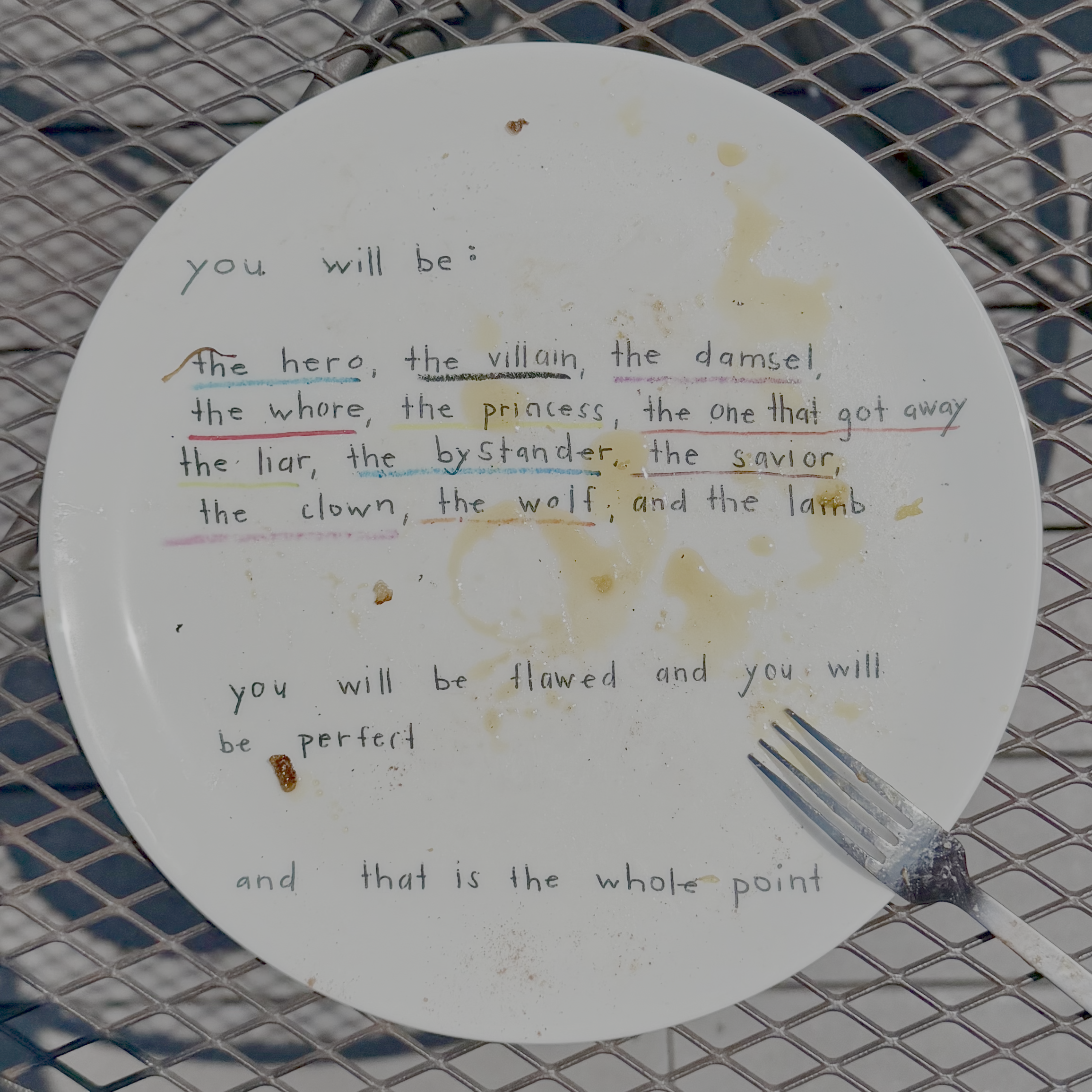
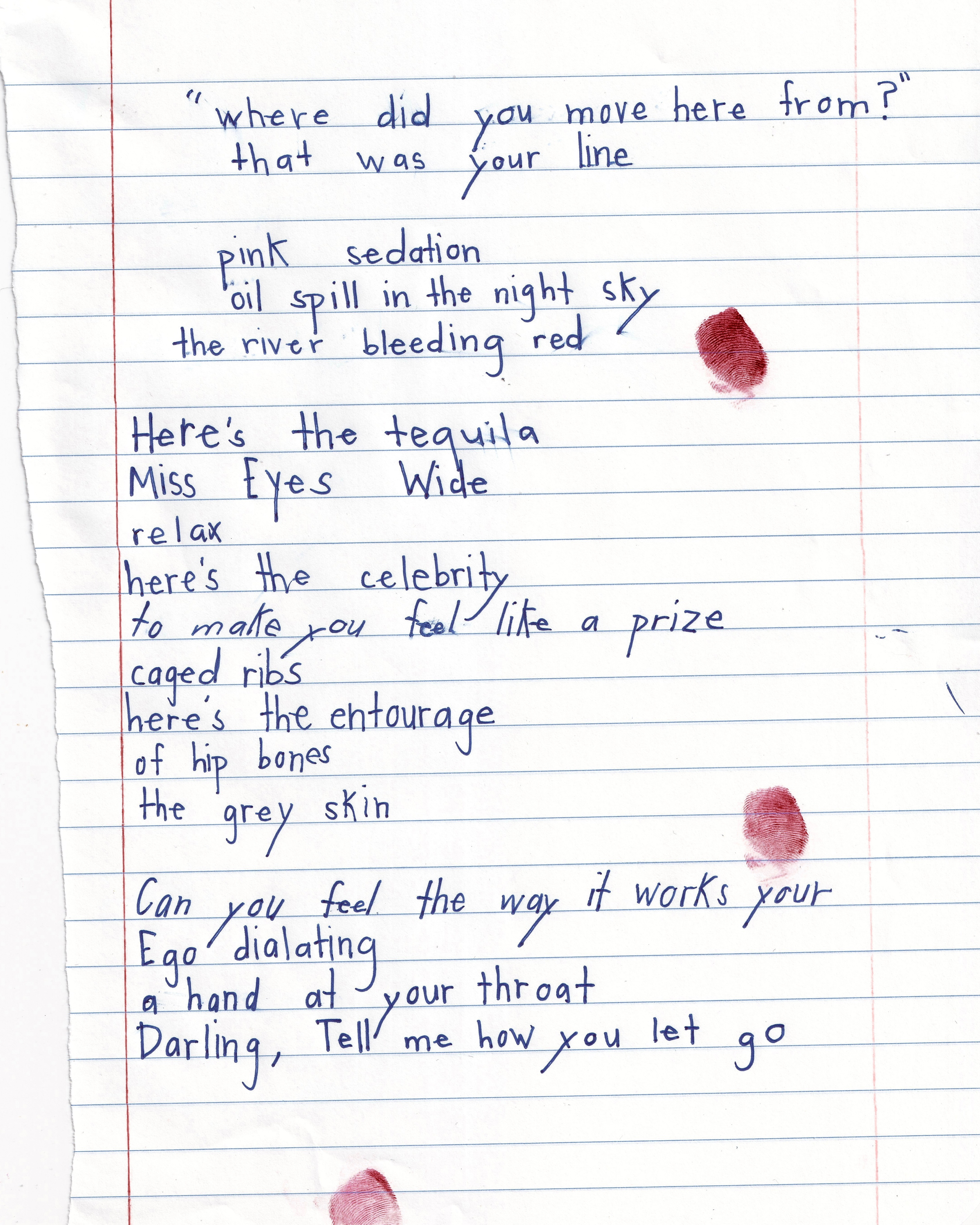
Kitty : So, my boyfriend was actually the inspiration for that. He would write things on the typewriter, then scan them, add little doodles and whatnot, and post the scanned versions as JPEGs. I remember thinking, wait, this is really cool. So I started handwriting all my poems and decided to make an Instagram account to post them on, and I watched the account just keep growing and growing and growing. Emphasis on the art-poetry-book of it all.
Marissa: How would you describe your poetry, what kind of style do you go for and or literary devices do you like to incorporate in your poems?
Kitty: I’m not sure. I think my writing doesn’t follow any sort of rules, so I guess, in that case, you could call it an experimental style. Each page acts as a different scene, so I try to evoke distinct imagery with each one.
I wouldn’t call it stream of consciousness either, because there was a lot of editing and planning that went into it. So it’s not like I’m just saying, “Here, everyone, is my stream of consciousness.” Although, I remember reading Água Viva by Clarice Lispector after the editing process, and thinking, “I didn’t even know you could write a book like this and just push publish!” She was someone who insisted on the integrity of her work and wouldn’t allow it to be edited, and I really like that.
Marissa: What was your writing/ creative process for Whiskers of a kitten?
Kitty: I don’t really have any creative rituals or routines to get me into the writing mindset. It just comes to me. And the thing about Whiskers is that I’ve been writing it since 2021, so it had been finished for a while before I decided to publish it. I worked with an amazing editor who’s also a mystic and calls himself a “creative midwife.” His biggest piece of advice was, “Show me, don’t tell me. Don’t just say, ‘I miss you.’ Show me how that feels. Give me an image.”
And he was very honest with me. When he first went through the book, he was like, “Half of these are not strong.” So I had to embark on this long editing process from May to December. I was revisiting all these things I had written about in the book that had happened to me, and I was very sensitive during that process, but at the same time, it felt cathartic. I would carry my Siken book around with me during that time. I also didn’t work on anything else during that period; my main focus was reworking this book.
Marissa: A good editor can really breathe new life into your work.
Kitty: Absolutely. It’s crazy. I thought an editor would just be a line editor who checked my spelling, but no, he helped me give birth to a whole new book. I was like, “Holy shit, you really pulled this out of me.”
Marissa: you recently published a really moving and relatable piece on Substack about your struggle with addiction and there’s a quote that really resonated with me; where you recount this moment of you and a friend both reflecting on the period of your lives when you were both in active addiction:
The quote: “i think back then we existed in purgatory and now we’ve granted ourselves access to the world”
Marissa: What do you feel like you were unable to access about the world or even yourself while you were in addiction that sobriety, and the process of bringing Whiskers of a Kitten to life, has allowed you to access?
Kitty: Isn’t that sentence incredible? My close friend wrote that, and she’s also a poet. But what I couldn’t access, I mean, at the core, was my truest self. I also feel like addiction is this void without a face. When I think about it, I think sobriety allowed me to confront that void and alchemize it. I no longer let the void boss me around or run away scared of it.
This book is a product of sobriety. Now that it’s been a year of sobriety for me, I feel like I’ve been able to access art in a more colorful way. I’m able to actually sit with my emotions and the void and create something with them, instead of trying to numb them or transmute them into partying.
Marissa: I feel like, as humans, we sometimes confuse the need or drive to consume, whether it be drugs, partying, or social media, with the desire, or drive, to create. That’s why, when we blindly consume, we’re often left feeling empty, whereas when we meaningfully create, we’re left feeling fulfilled.
Kitty: Exactly. That makes me think about how creative and sexual energy can also be really similar. So sometimes, when you’re super boy-crazy or relationship-crazy, you have to take that energy and put it somewhere productive. And that’s also why I think it’s so detrimental to be with someone toxic, because that can completely destroy your creative process.
Marissa: Oh absolutely, anytime I've been in a shitty relationship, I don’t write.
Kitty: Oh yeah, but the opposite of that is that when I got into a healthy relationship, I feel like it really nurtured my creativity and put me in a position where I felt safe enough to examine my past in the way I needed to, so I could properly edit and create this book.
Marissa : You’ve also spoken about how much pride you take in building your career largely on your own, without parental support, even selling your car, taking on debt, and facing rejection along the way. What advice would you give to other young creatives trying to establish themselves in places like New York when it can feel like they’re competing against people with financial support and opportunities they don’t have access to?
Kitty: You have to find other people who are also doing it on their own and build a support system. That’s why my boyfriend and I get along so well. He’s also had to work for what he has, and if he were a trust-fund or nepo kid, we just wouldn’t have the same chemistry.
Marissa: I didn’t even know what the word trust-fund was until I moved to New York.
Kitty: Me neither. My friends and I will sometimes joke, “I’m so happy none of us have a secret trust fund that the others don’t know about.” There’s just this mutual respect of, “Oh yeah, we really built this shit for ourselves.”
And I meet people sometimes who are like, “How do you do it? How do you create at the scale you do and work the way you do?” And I’m just like, “I have to!! I had to work for my success, and I still have to work to maintain that success.” And for me, this may sound extreme, but I was just like, I’d rather die than not follow my dreams and work toward what I want.
Marissa: I’m happy that you exist as an example for people, showing that you can do it on your own and that success through sheer grit and determination is possible.
Kitty: And I’ll also be honest, doing it on your own will be the hardest fucking thing you’ve ever done. But you also become a different person in the process, and it’s worth it. You have to want it so badly that you can’t imagine another life without it.
Marissa :You occupy this really interesting space between writing, visual art, and content creation. Has having an audience influenced the way you approach your art and writing?
Kitty: Absolutely, and I wish it didn't. When I was making the book it felt like the first time I was creating something without getting that instant validation. I struggled creating something not for an immediate audience, and I feel like social media offers that immediacy.
And yes, I am often creating for an audience but I don't always think it's necessarily a bad thing, it can be motivating, and we are all inspired by feeling connected and seen I think.
Marissa: When you were in the process of putting together the book did you feel like it was more for you than an audience, even though the end-goal was to publish for an audience?
Kitty: Oh for sure, That process was for me.
Marissa: Final question: what do you hope others will take away from your book?
Kitty: I think, if anything, I want a young person to feel opened up to art and leave feeling inspired and wanting to create.
♡
After our conversation comes to an end, Kitty walks me back towards the train. This time, with her as my guide, I don’t get lost—a fitting emphasis on the peroxide-blonde High Priestess element of it all. We say our goodbyes, and, to my surprise, as a parting gift, she sends me off with a slice of chocolate cake, with sprinkles, of course.
I descend into the station, chocolate cake in hand, feeling inspired to write and ready to alchemize my own dreams into reality.
Written by Marissa
Join Marissa's World →Join Hot Literati
Founding membership, $12.99 a month. Your chapter and its events, the writing space, book club, and a byline here.
Join Hot LiteratiWe're always looking for new writing — submissions are open to all Hot Literati members. Submit your work →