Art & Culture
'The Devils' Review
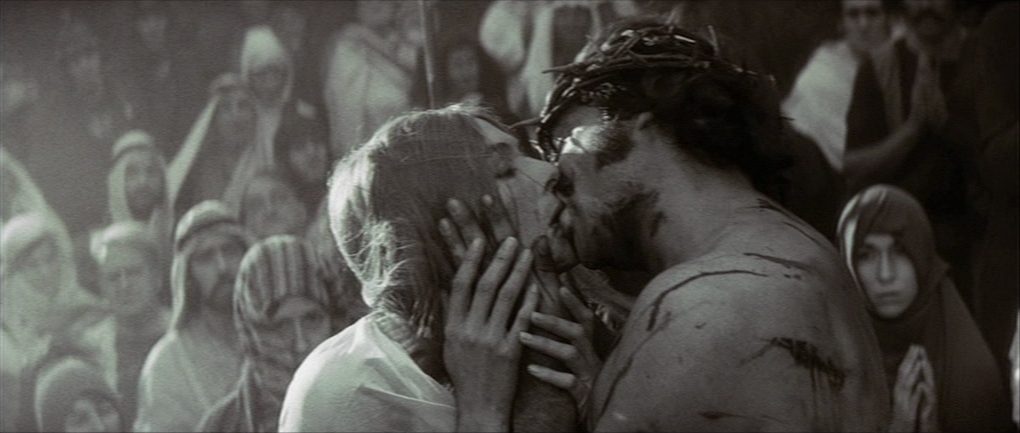
“If the devil’s evidence is to be accepted, then the virtuous people are in danger. The devil has spoken, and to doubt his word is sacrilege. You have totally perverted Christ’s own teaching.”
You would not mistake a frame from The Devils for one from any other movie. Few films make such extravagant demands on their audiences, or leave them feeling quite so exhilarated, appalled and unsettled. Watching Russell’s extraordinary vision of religious authority and possession, moviegoers may find themselves experiencing a milder form of the hysteria that overtakes the nuns in their Ursuline convent. Russell's full-bodied baroque sensibility, supercamp theatricality and wantonly abrasive excess test the limits of middle-class cultural acceptability and those of the film establishment itself. The Devils belongs to a tradition of cinema whose subversive force derives from its rejection of aesthetic normalization – the Disneyfication of the planet, in which experience is rendered palatable, conflict tidied away and transgression converted into a marketable gesture. More than half a century after its release, the film, in its complete restoration, retains the capacity to make the surrounding culture look inhibited by comparison.
The most recent incarnation of The Devils has come as a new 4K restoration for a one-week theatrical run through Clockwork, Warner Bros.’ new specialty label, headed by former NEON chief marketing officer Christian Parkes. Working from the original camera negative and 35mm magnetic sound elements, the restoration team followed the cut reconstructed in 2004 under the supervision of Russell and editor Michael Bradsell, with the collaboration of Mark Kermode and Paul Joyce. The result brings audiences closer to the film Russell originally conceived, after a history of successive indignities: censorship on both sides of the Atlantic, unsympathetic re-editing that compromised its narrative, and decades in which the intended cut circulated as a kind of cinematic legend. The response to the film, including the enthusiasm surrounding its recent Cannes presentation, has suggested that its reputation as an unassimilable object of cinematic extremity has not exhausted its appeal.
Adapted from Aldous Huxley’s 1952 book The Devils of Loudun and John Whiting’s 1960 play The Devils, the film recounts a seventeenth-century French witch hunt in which religious authority becomes an instrument of political ambition. Urbain Grandier, a libertine priest, finds himself in the way of Cardinal Richelieu’s designs for the town of Loudun. Sister Jeanne, the convent’s tormented abbess, played by Vanessa Redgrave, is implacably in lust with Grandier, and her frustrated desire becomes entangled with the forces gathering against him. The film opens without the reassuring conventions of historical exposition, plunging instead into the theatrical world of Louis XIII, played by Graham Armitage, who appears in drag as Venus and later shoots Huguenots dressed as birds while Richelieu’s designs for the consolidation of royal and ecclesiastical power take shape around him. Here, those who dictate the moral order are free to indulge their own appetites, and persecution itself becomes a form of entertainment.
The film’s torrents of inventiveness give this marriage of spectacle and cruelty its fullest expression, while making an incursion into the very idea of what respectable cinema can look like. Presiding over it all is the production design of a twenty-eight-year-old Derek Jarman, in his feature film debut. His towering white walls and tiled interiors give Loudun an austere grandeur, their apparent purity belied by the violence enacted within them. Such extravagance makes it tempting to regard the film chiefly as an exercise in camp, yet to describe The Devils as camp, or even as a work of provocation, is to risk making its excess sound like an end in itself. Russell’s stylization is inseparable from his subject: the exorcisms become obscene public spectacles because the authorities have made a theater of spiritual salvation. The frenzy belongs as much to the men conducting the exorcisms as to the women declared possessed, and the proceedings allow appetites to flourish under the sanction of religious duty. In The Devils, moralism is the veil behind which the moralists act out their appetite for punishment. It is the sleight of hand by which they cover, justify and deny their own cruelty. Their professed commitment to religious purity supplies the language through which violence becomes permissible: Grandier’s destruction becomes a defense of the faith, the public humiliation of the nuns an exposure of demonic corruption, and torture an instrument of spiritual and civic restoration. Once the devil’s testimony has been accepted as sacred evidence, the accused has no possible defense. To question the accusation is itself sacrilege.
In his enshrining introduction to The Devils at the BFI, Mark Kermode said that the film’s central themes – brainwashing, the manipulation of religion and the unholy marriage of church and state – will mean different things to audiences living through different historical moments. Its endurance lies partly in this capacity to speak to successive abuses of power without becoming confined to any one of them. As Kermode went on to explain, Russell was not a doctrinal filmmaker making a specific political point about his own moment, but taking a historical story to express a universal truth: the use of religion for political ends is dangerous. Russell himself, though he did not consider himself a political filmmaker, recognized the film’s political dimension. In his 1995 Sight and Sound interview with Kermode, he called it his “one political film.” What could be shown in the name of exposing cruelty, and what had to be concealed in the name of decency, had been contested since its release.
The censors’ efforts to make The Devils fit for public consumption left it mutilated in ways that went well beyond the removal of a few offensive images. In the same Sight and Sound interview, Russell recalled that John Trevelyan, then secretary of the British Board of Film Censors, objected particularly to the duration of the torture scenes: the needles pushed into Grandier’s tongue, the breaking of his knees, the physical degradation inflicted in the name of justice. Trevelyan’s preference was to show only enough to establish what was happening, leaving sound and the audience’s imagination to supply the rest. The infamous “Rape of Christ” sequence was removed in its entirety. According to Russell, however, nudity itself had not been the BBFC’s concern; the Americans demanded further cuts to graphic nudity, leaving a version he described as “disjointed and incomprehensible.” The restrictions also extended beyond the cutting room. Warner Bros., the British Board of Film Censors, religious campaigners, newspapers and local authorities all participated, in different ways, in the controversy surrounding the film’s release. The Nationwide Festival of Light campaigned against it, while some local authorities used their licensing powers to prevent it from being shown. Russell recalled that protesters sometimes condemned the film without having seen it. The spectacle of denunciation gathering force among people unfamiliar with the work itself remains recognizable in contemporary culture. The moral fervor directed at The Devils persists in the puritanical demand that art conform to approved beliefs and tastes.
In the Letterboxd era of art consumption, the Disneyfication of art and our expectations of it has become a cultural liability, narrowing both what artists can make and what audiences are willing to encounter. The demand for frictionless entertainment extends to films ostensibly valued for their difficulty: their offenses must be defensible, their ambiguities reconcilable with the viewer’s own sense of moral correctness. There is little room for an encounter in which our taste, sympathies or convictions might become uncertain. Even when a film escapes those expectations, there remains the impulse to make its disturbances socially manageable, to establish that we are too knowing to be unsettled. At a screening of The Devils at the IFC Center in Manhattan, the scene in which a young woman tells Grandier she is pregnant was met with ironic laughter, as though viewers needed to make clear to one another that they got it. The introduction of the John Lennon-esque Father Barré during Sister Jeanne’s torturous exorcism prompted a similar response. Walking out after the screening, a friend asked me whether the man playing Barré was famous: why else had everyone laughed? She felt she had missed some little secret shared among the other viewers. Even here, in an audience willing to seek out The Devils, there seemed to be some pressure to demonstrate that its excesses could be absorbed into a familiar irony. I could hardly know what each person found funny, but the cumulative effect was to make composure seem like a condition of belonging to the audience. One could appreciate Russell’s outrageousness, provided one appeared entirely at ease with it. This, too, seemed a concession to respectability: the film could be as indecorous as it pleased so long as it could be taken as a joke.
Whatever the prevailing tastes of middle-class cultural respectability, or the knowing irony with which audiences meet its excesses, The Devils still offers more than contemporary habits of viewing can accommodate. The pleasure of its latest restoration lies in the invention, vulgarity and conviction of a filmmaker unwilling to reassure his audience that everything it encounters can be made comfortable, familiar or morally tidy. More than half a century of controversy has done little to exhaust it. To see The Devils now is to feel how tiresome the boundaries of respectability have become, and how much imaginative life survives beyond them.
Written by Linamaria Gonzalez
Join Linamaria's World →Join Hot Literati
Founding membership, $12.99 a month. Your chapter and its events, the writing space, book club, and a byline here.
Join Hot LiteratiWe're always looking for new writing — submissions are open to all Hot Literati members. Submit your work →